MINANGKABAU TRADITION
The man we interviewed, Arman migrated from Padang to Medan about 32 years ago. Arman is from the Minangkabau tribe and has been cooking and selling lemang since he set foot in Medan. His wife, Epriyanti is also from the Minangkabau tribe and has been working alongside her husband for 25 years now.
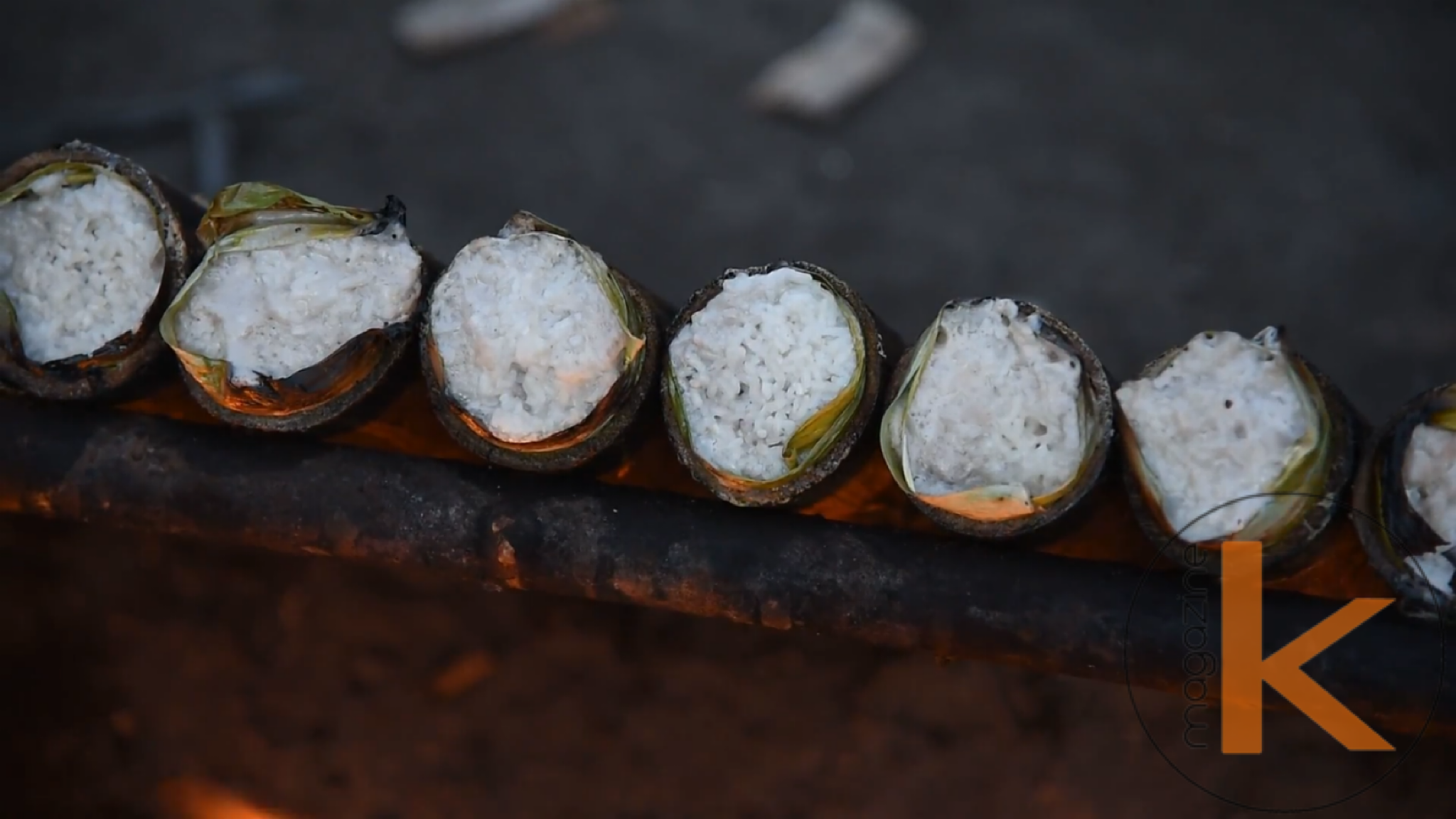
According to Minangkabau tradition, the cooking technique of lemang was first introduced by Sheikh Burhanuddin in the early 17th century. As he was preaching to introduce Islam in the land of Minang, for halalness purpose, he asked the residents to look for bamboo blades covered with young banana leaves to be used as a tool to cook glutinous rice mixed with coconut milk by roasting it on a wood-fired stove. Until now, lemang is usually consumed to mark the end of the fasting period leading up to Eid al-Fitr and Eid al-Adha
BATAK TRADITION
According to Batak tradition, especially amongst Mandheling and Ankola groups, this method of cooking rice has been very common since ancient times . In a horja party, this type of food is always present. “Pangan ma lomang i lae, ido panganon ni ompungta, anso manortor hita” is an old proverb in Batak language that is commonly used in ceremonial parties.
Evidence that the ‘mangalomang’ method has already been existing in Ankola was especially introduced by an Austrian travel guide Ida Pfeiffer on her tour to Silindoeng and Toba in August 1852. On October 12, 1852, Ida Pfeiffer wrote her own travel story in which she witnessed local people cooking rice by wrapping it in banana leaves, putting it in bamboo, and then burning it for a long time. She then sent this article to a newspaper and was first published by the newspaper Algemeen Handelsblad edition 09-05-1853 in Batavia, Nederlandsche Indie. This publication was then rewritten by a number of newspapers published in Batavia, Semarang, Soerabaija and Rotterdam. As far as is known, the story of Ida Pfeiffer’s journey in the Batak Land is an authentically documented record of how lemang is made.